Snow Melt Swimming: What Glacially Fed Rivers Actually Do to Your Skin
 J. Reeves
Snow melt water has a personality. Pull yourself into a glacially fed river in early summer and you feel it within seconds: a particular kind of cold that doesn't just chill, it compresses. The skin contracts fast. Breathing shortens. Your body's entire surface area announces itself at once.
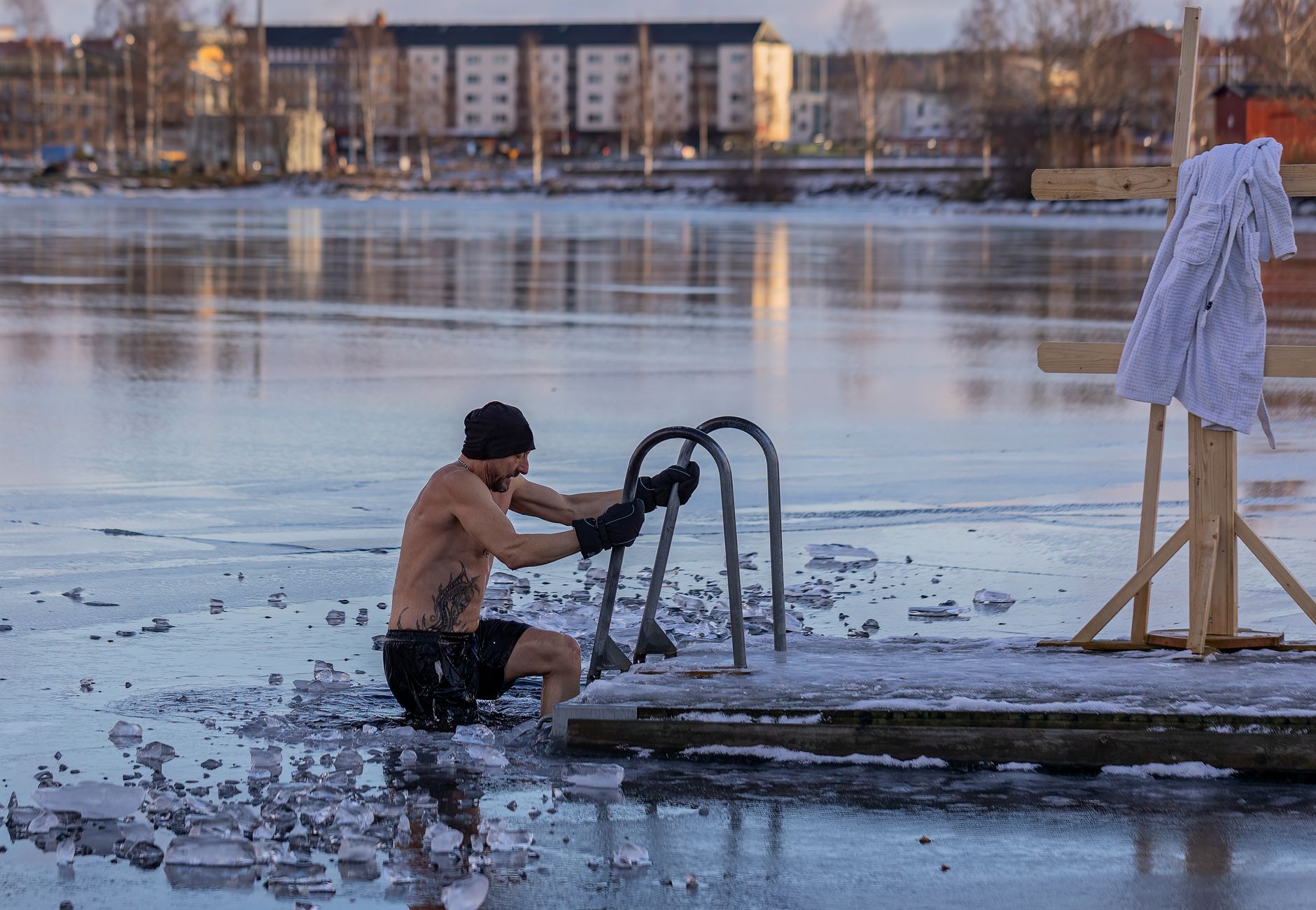 Photo by Olavi Anttila on Pexels.
This is different from a cold lake, and different again from the ocean in winter. Understanding why requires looking at what snow melt actually is.
What Snow Melt Water Actually Contains
Water that has spent months locked in a snowpack and then filtered slowly through rock and sediment arrives at the river stripped of almost everything. Mineral content is extraordinarily low. Dissolved solids hover near zero. The pH trends slightly acidic, typically between 5.5 and 6.8, depending on the geology it crosses on the way down.
That low mineral load matters for skin. Most water we swim in carries calcium, magnesium, sodium, and chlorides in concentrations the skin notices. Mineral springs leave a residue you can feel drying on your forearms. Saltwater reshapes the osmotic pressure across your epidermis entirely. Snow melt does neither. It arrives almost neutral, chemically speaking, and the skin encounters very little to resist or absorb.
What it lacks in solutes it makes up for in thermal aggression.
The Cold That Compresses
Glacially fed rivers in summer run between 1°C and 7°C at peak melt, depending on distance from the source and ambient temperature. Your skin's surface temperature on a warm day sits somewhere around 33°C to 34°C. That gap, sometimes 30 degrees or more, triggers a vasoconstriction response that is genuinely systemic.
The body pulls blood away from the skin fast. Capillaries clamp down. The skin takes on that familiar tightened, almost plastic quality that cold water produces, as though the outer layer has been shrink-wrapped slightly closer to the muscle beneath.
Where snow melt differs from other cold swims: the absence of minerals means there's no buffering at the skin's surface. Saltwater's sodium provides some electrochemical interaction that marginally slows temperature transfer. Pure, low-mineral water conducts heat away from skin more efficiently. You feel the cold more completely, and you feel it faster.
After two or three minutes, the initial shock plateaus. A secondary sensation sets in that regular cold water swimmers recognize: a kind of buzzing clarity across the skin's entire surface. Every nerve ending has reported in. The skin stops screaming and starts humming.
What Happens After You Get Out
The rewarming phase in snow melt swimming is notably pronounced. Because the body suppressed surface circulation so aggressively, the return of blood flow produces a flushing sensation across the skin that can last 20 to 40 minutes. The skin reddens, feels tight, then releases into a softness that's hard to describe without sounding like you're overselling it.
The low mineral content plays a role here too. Without salt or dissolved calcium drying on the skin's surface as water evaporates, the epidermis doesn't pull the same way it does after an ocean swim. Snow melt water leaves the skin surface clean in a literal sense. The skin's own sebum and acid mantle remain largely undisturbed. Dryness, if it comes, comes later and more mildly.
One counterintuitive detail: the skin often looks better after a snow melt swim than it feels during one. The vasoconstriction followed by rapid vasodilation creates a temporary plumping effect in the dermis. Experienced cold water swimmers sometimes describe their skin as looking more awake, more present, after cold river immersion than after any other kind of swim.
Reading the River on Your Body
Snow melt rivers also carry suspended fine sediment, what glaciologists call glacial flour, in varying concentrations. When this is present, usually identified by that pale milky-blue color in the water, the fine particles create a mild mechanical effect on the skin's surface during swimming. Not abrasion exactly. More like the water has texture, a faint softness working against the skin with every stroke.
Swim downstream in high-sediment melt water and you'll notice it on your forearms, on the tops of your hands, on your face. A gentle evenness, as though the water has been lightly polishing you the entire time.
That combination of thermal intensity, chemical purity, and occasional fine sediment makes snow melt swimming one of the more complete sensory experiences water offers. The cold is real and it demands respect. But what the skin remembers afterward is something closer to clarity than punishment.
Get in slowly. Stay in honestly. Let the melt water do exactly what it's been doing for ten thousand years.
Get Wet Human in your inbox
New posts delivered directly. No spam.
No spam. Unsubscribe anytime.