Whirlpool and Eddy Swimming: What Rotating Water Actually Does to Your Skin
 J. Reeves
Most swimmers think about water in terms of temperature and salinity. Rotating water changes the conversation entirely. When you enter a natural whirlpool or the spinning backflow of a river eddy, your skin stops being a passive surface and becomes something closer to a pressure map.
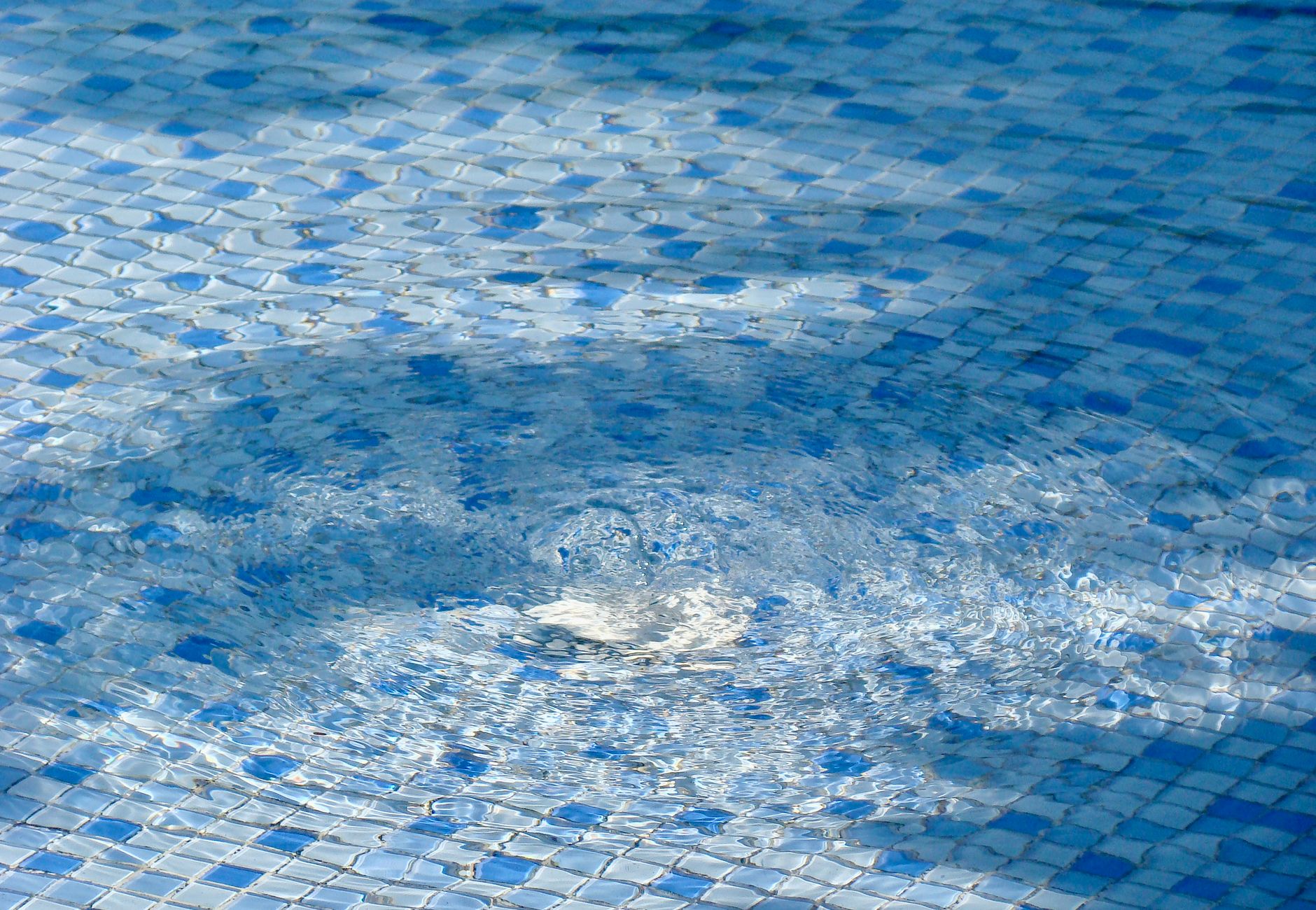 Photo by yanping ma on Pexels.
Here is what is actually happening.
The Physics Your Skin Reads
Water in rotation creates a pressure gradient that runs from the outer edge toward the center. Physicists call this the centripetal pressure effect. Your skin feels it as a mild, persistent squeeze that shifts direction depending on which part of your body faces the rotational current. Step into a moderate eddy behind a boulder and your shins register something different from your thighs, even at the same depth. The water is pushing inward at varying angles across your entire submerged surface.
This matters because your skin's mechanoreceptors (the Meissner's corpuscles and Ruffini endings packed into dermis) are wired to detect directional pressure changes. Still water gives them almost nothing to report. Moving laminar flow gives them a single sustained signal. Rotating water gives them a genuinely complex input: pressure that shifts in vector every few milliseconds as the current cycles past.
The result, for most people, reads as a low-level vibration. Some describe it as fizzing without bubbles.
Temperature Gets Complicated
In a river eddy, water from different depths and sources gets folded together. Surface water that has been sitting in sun mixes with cooler bottom water pulled up by the rotation. Your skin crosses thermal boundaries that exist horizontally rather than vertically. This throws off the body's usual thermoregulation signals.
Normally, you cool from the outside in, shedding heat through the skin layer closest to cold water. In rotating flow, the water itself is heterogeneous. A patch of warm surface water wraps around your left shoulder while cooler upwelled water contacts your right hip. Your skin sends conflicting temperature reports to the hypothalamus. Core temperature regulation lags slightly. Many swimmers report feeling oddly alert in eddies, and this is almost certainly why.
Skin Surface Effects After the Swim
Rotating water does something mechanically interesting to the outermost layer of skin, the stratum corneum. Because the pressure gradient keeps shifting direction, the tiny frictional forces on dead skin cells also shift. Over a ten or fifteen minute soak, this acts like a very gentle omni-directional exfoliation. It is not dramatic. You will not emerge with visibly different skin. But the surface feels slightly smoother, and the mild hyperemia (surface blood flush) from all that mechanical stimulation persists for fifteen minutes or more after you get out.
Natural whirlpools in rivers tend to carry suspended fine sediment, which amplifies this effect. Even particles too small to see add a light abrasive quality to the rotating contact. Salt content, if present, does its own work on barrier hydration. These variables stack.
Where to Find Moderate Rotating Flow
The best natural eddies for swimming form where a significant flow obstruction creates a clean separation zone: large boulders in fast rivers, bridge pilings in tidal channels, rocky headlands where tidal current bends around a point. Avoid anything with a strong vertical vortex component. Downward spiral flow can trap a swimmer at depth. Horizontal rotation in a backwater pool is what you want.
Small whirlpools at the confluence of two currents are excellent. The water rarely reaches dangerous speeds, the rotation is steady, and the thermal mixing is pronounced. These spots also tend to concentrate warmer surface water against the skin, which makes the pressure sensation easier to appreciate without the cold-shock override.
Why It Reads as Pleasurable
Pressure variation is sensorially interesting in a way that static pressure is not. Your nervous system habituates to constant stimuli quickly; it pays close attention to change. Rotating water keeps changing. Every second of contact delivers a slightly different pressure signature across your skin, which keeps the somatosensory cortex engaged rather than habituated.
There is also something about buoyancy in rotating flow. The Bernoulli pressure drop at the vortex core reduces effective water pressure slightly, so a part of your body near the center of spin feels fractionally lighter. Swimmers sometimes describe a pull, a gentle tug toward the middle. At safe speeds, that sensation is one of the more unusual things water can do to a floating body.
You spend years learning what flat water feels like against skin. Rotating water is a different language. Worth learning.
Get Wet Human in your inbox
New posts delivered directly. No spam.
No spam. Unsubscribe anytime.