Cave Pool Swimming: What Underground Water Actually Does to Your Skin
 J. Reeves
Step into a cave pool and the first thing that registers is temperature. Not cold exactly, but constant. Most cave water sits between 10 and 14 degrees Celsius year-round, insulated from seasons, unaffected by afternoon sun or winter frost. Your skin reads this differently than ocean cold or river cold, because the shock has no context. Above ground, cold water comes with wind and sky and the expectation of chill. Underground, the temperature arrives without warning signals, and the nervous system responds faster.
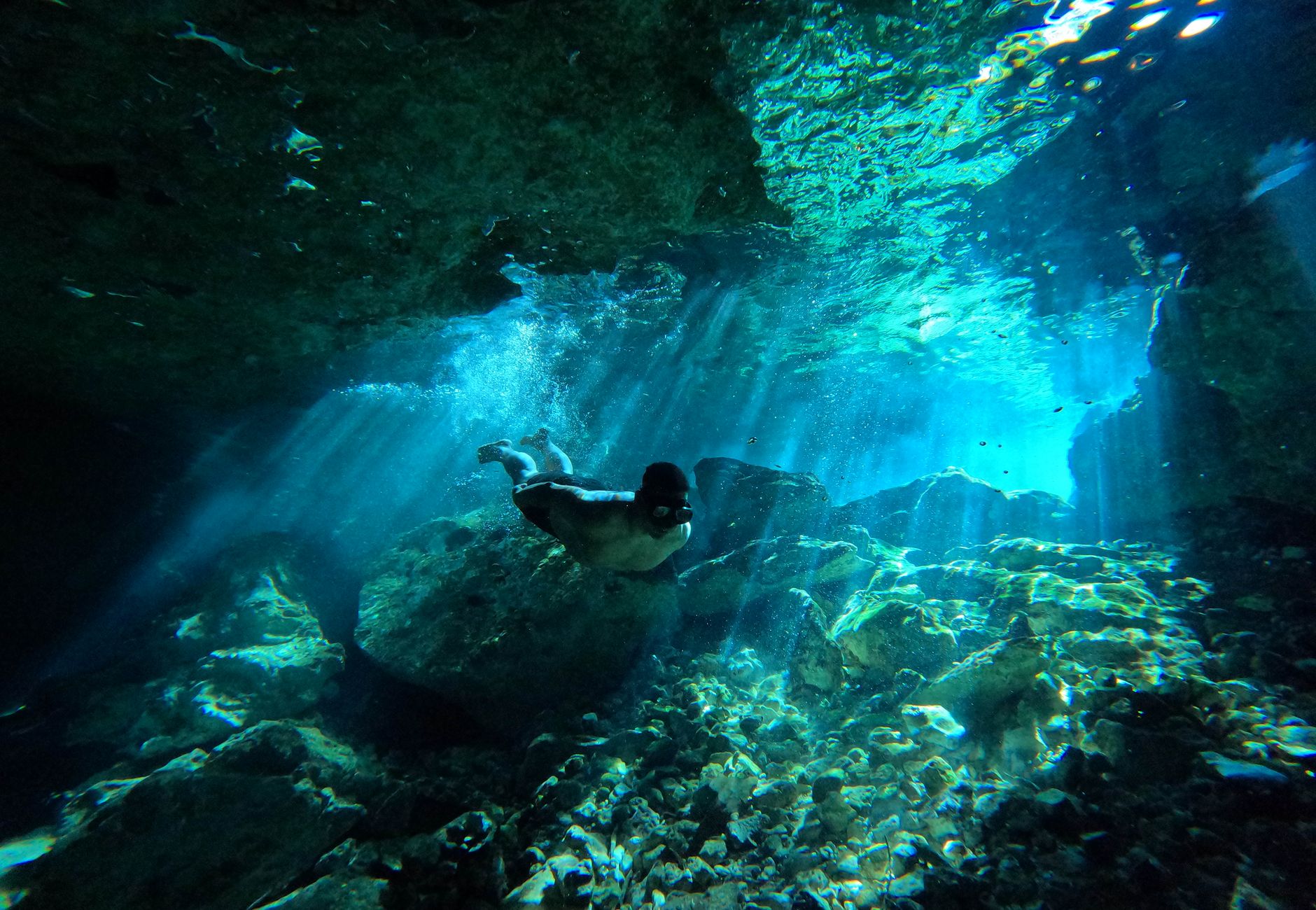 Photo by Keph The Artist on Pexels.
What makes cave water genuinely unusual is its mineral load. Rainwater percolates through limestone for years, sometimes decades, before pooling in a cavern. Along the way it dissolves calcium carbonate, magnesium, and trace amounts of silica. By the time it reaches the pool where you're swimming, it's saturated in a way that surface freshwater simply isn't. Some cave systems produce water with calcium hardness levels above 300 mg/L. That's harder than most municipal tap water, and you feel it: a slight resistance on the skin, a slickness that isn't quite slickness, more like the water is reluctant to sheet off.
Calcium-rich water temporarily tightens the skin's outermost layer. It displaces some of the lighter oils from your skin's surface without stripping the lipid barrier the way chlorine does. Swimmers who frequent cave pools often report skin that feels almost buffed afterward, slightly smooth in a way that takes a few hours to fade. There's a reason: the calcium ions interact weakly with keratin proteins in the stratum corneum, the outermost dead-cell layer of skin. Nothing dramatic happens. But the texture shifts.
The darkness is its own sensory variable. Without visual reference, skin becomes the primary channel for spatial information. You feel the water's temperature gradient more acutely, notice the stillness or faint movement of the pool, detect the cooler currents near submerged springs with unusual precision. Sensory deprivation research has established that removing one input sharpens others; cave swimmers experience this in real time, with their skin doing work that eyes normally handle.
Dissolved oxygen in cave water runs lower than in surface pools and rivers. Moving water, exposed to air and agitated by wind or current, stays well-oxygenated. Still cave pools, especially those fed by slow percolation rather than active springs, can sit at 60 to 80 percent dissolved oxygen saturation. For skin, this matters less than it does for the cave's resident fauna, but the muted oxidation environment does mean the water is chemically gentler in certain ways. Fewer free radicals, minimal UV exposure, no algae producing secondary compounds. Skin emerges from cave swims with less of the mild inflammatory load that follows ocean or river exposure.
There's also the pH. Limestone-saturated water tends to be alkaline, typically ranging from 7.5 to 8.5. Human skin sits naturally between 4.5 and 5.5, slightly acidic, which is protective. Alkaline water disrupts this acid mantle temporarily, raising skin pH and making the barrier marginally more permeable for a short window after swimming. Most people don't notice. But those with sensitive or eczema-prone skin sometimes find cave water more irritating than expected, precisely because the gentle, mineral-rich water lowers their defenses more than harsher-seeming environments do.
Rinsing afterward matters more than people think. Calcium and magnesium ions left to dry on skin pull moisture with them as they crystallize. That white residue you sometimes see on rocks near a cave pool exit? The same process, scaled down, happens on skin. A quick rinse with warm water removes the mineral film before it sets, and skin retains its moisture more effectively.
Perhaps what's most striking about cave pools is the absence of variables that define other aquatic environments. No wind. No UV. No current. No salt. No chlorine. No algae bloom, no surface pollution. What remains is water in its most distilled relational state: cold, mineral, still, and total. Skin in a cave pool is in contact with something genuinely ancient. The water around you fell as rain during a decade you didn't live through, and it has been traveling toward this moment ever since.
Get Wet Human in your inbox
New posts delivered directly. No spam.
No spam. Unsubscribe anytime.