Peat Bog Swimming: What Dark, Acidic Water Actually Does to Your Skin
 J. Reeves
Peat bogs are not inviting by most conventional measures. The water is the color of strong tea, sometimes nearly black in shadow. It smells faintly of earth and vegetation. The bottom, where there is one, disappears into soft, giving peat that holds your foot for a second longer than feels comfortable. And yet swimmers who have been in a bog once tend to go back.
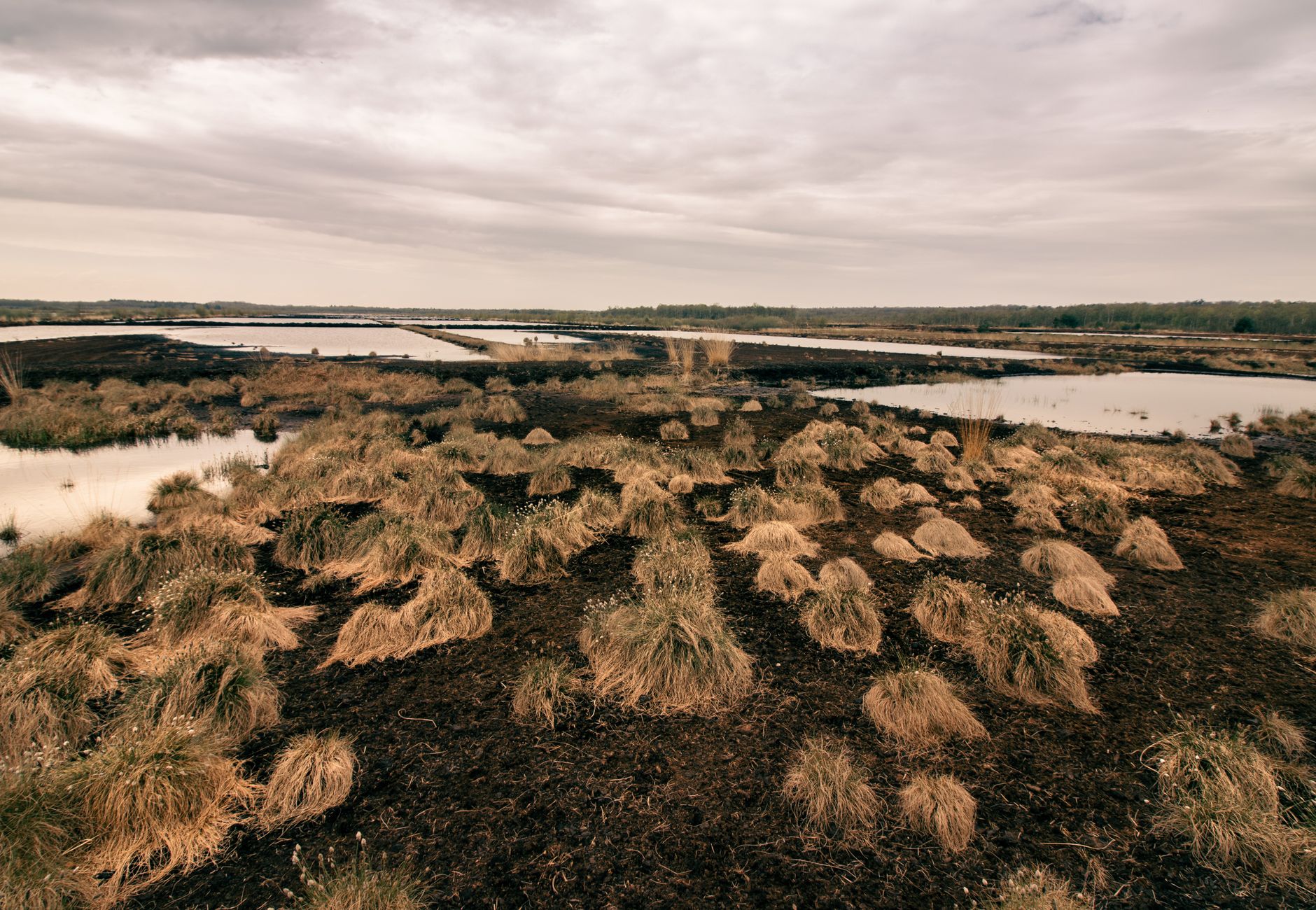 Photo by Julia Fuchs on Pexels.
The experience is distinctive enough to deserve its own account.
What's Actually in the Water
Bog water chemistry is unlike almost any other natural swimming environment. The key substances are humic acids and fulvic acids, released as ancient plant matter (mainly sphagnum moss) decomposes over centuries. These organic acids drop the pH of bog water significantly. Many well-documented peat pools in Scotland, Ireland, and Scandinavia register between pH 3.5 and 5.0. That's more acidic than black coffee.
The water also contains high concentrations of dissolved tannins, which produce that characteristic amber-to-mahogany color. In deep water over dark peat, visibility can drop to near zero within a foot of the surface. Mineral content is extremely low. Bogs receive most of their water from rainfall rather than groundwater springs, so there's very little calcium, magnesium, or sodium. The result is ultra-soft, highly acidic, heavily stained water with almost no microbial activity. That last point matters.
Sphagnum moss releases an antimicrobial compound called sphagnan, which binds to bacteria and suppresses their growth. Bog water has been used for wound dressing in various cultures across northern Europe, including documented use during World War I when sterile bandages ran short. The bogs were not wrong.
How Your Skin Responds
Step into a peat bog and the first thing you feel is the cold. Most peat pools, even in summer, sit between 8°C and 14°C. The temperature response mirrors what happens in any cold natural water: vasoconstriction, a sharp intake of breath, that particular awareness of your own outline that cold water produces.
Then the texture registers. Bog water feels notably soft, almost slippery, in the way that low-mineral water often does. Without dissolved salts to create surface tension effects against your skin, the water slides rather than grips. Swimmers frequently describe it as feeling lighter than lake or river water, though the sensation is subjective.
The acidity is where things get genuinely interesting. Human skin sits naturally around pH 4.5 to 5.5. Bog water, at pH 4 to 5, is actually close to your skin's own acid mantle. Swimming in mildly acidic water doesn't strip the protective surface layer the way chlorinated pool water or even very alkaline tap water can. Many swimmers with sensitive or reactive skin report that bog swimming leaves them feeling less tight and dry than a comparable swim in a lake fed by limestone-heavy groundwater.
Longer exposure (30 minutes or more) in strongly acidic bog water can begin to affect the skin differently. The humic acids act as mild chelating agents and may draw out trace metals from the uppermost skin layers. Some swimmers notice their skin looks slightly flushed after a long bog swim; others report temporary softening of rougher skin patches on heels and elbows. Neither effect is dramatic, and neither persists past a few hours.
One consistent report from regular bog swimmers: the tannins stain. Fair skin especially can take on a faint yellowish-amber cast after prolonged immersion, most visible on lighter areas of the body. It washes off, but it can take a second shower to remove completely.
The Sensation from the Outside
For photography and visual work, bog water offers something no other environment quite replicates. The dark water creates an almost mirror-like opacity at the surface. A body emerging from a peat bog is wet with water that looks like it carries color: amber dripping off shoulders, dark streams running across the chest, that tannin-stained water catching light differently than clear water ever does.
Droplets on skin hold their amber tint. Wet hair pulled back from the face glistens with that unusual warmth. The contrast between pale skin and dark water is stark in a way that's difficult to manufacture artificially.
graph TD
    A[Sphagnum moss decomposition] --> B(Humic & fulvic acids released)
    B --> C{Low pH water: 3.5 to 5.0}
    C --> D[Skin acid mantle preserved]
    C --> E[Tannin staining on skin]
    C --> F(Antimicrobial environment)
    D --> G[Reduced post-swim dryness]
Who Should and Shouldn't Swim in Bogs
Open cuts or broken skin should stay out. Despite the antimicrobial properties of sphagnan, highly acidic water on raw tissue is uncomfortable and potentially counterproductive for healing. Anyone with a compromised skin barrier condition should approach with caution and test briefly before committing to a long swim.
For everyone else, a peat bog swim is among the more unusual sensory experiences available in cold water. The color alone is worth paying attention to. Few environments make your own skin look so different, so stained and specific to a place, as the dark water rising around you.
The bogs are old. The water is patient. It will leave its mark.
Get Wet Human in your inbox
New posts delivered directly. No spam.
No spam. Unsubscribe anytime.