Hammam Steam and Skin: What Centuries-Old Wet Heat Actually Does to Your Body
 J. Reeves
Hammam Steam and Skin: What Centuries-Old Wet Heat Actually Does to Your Body
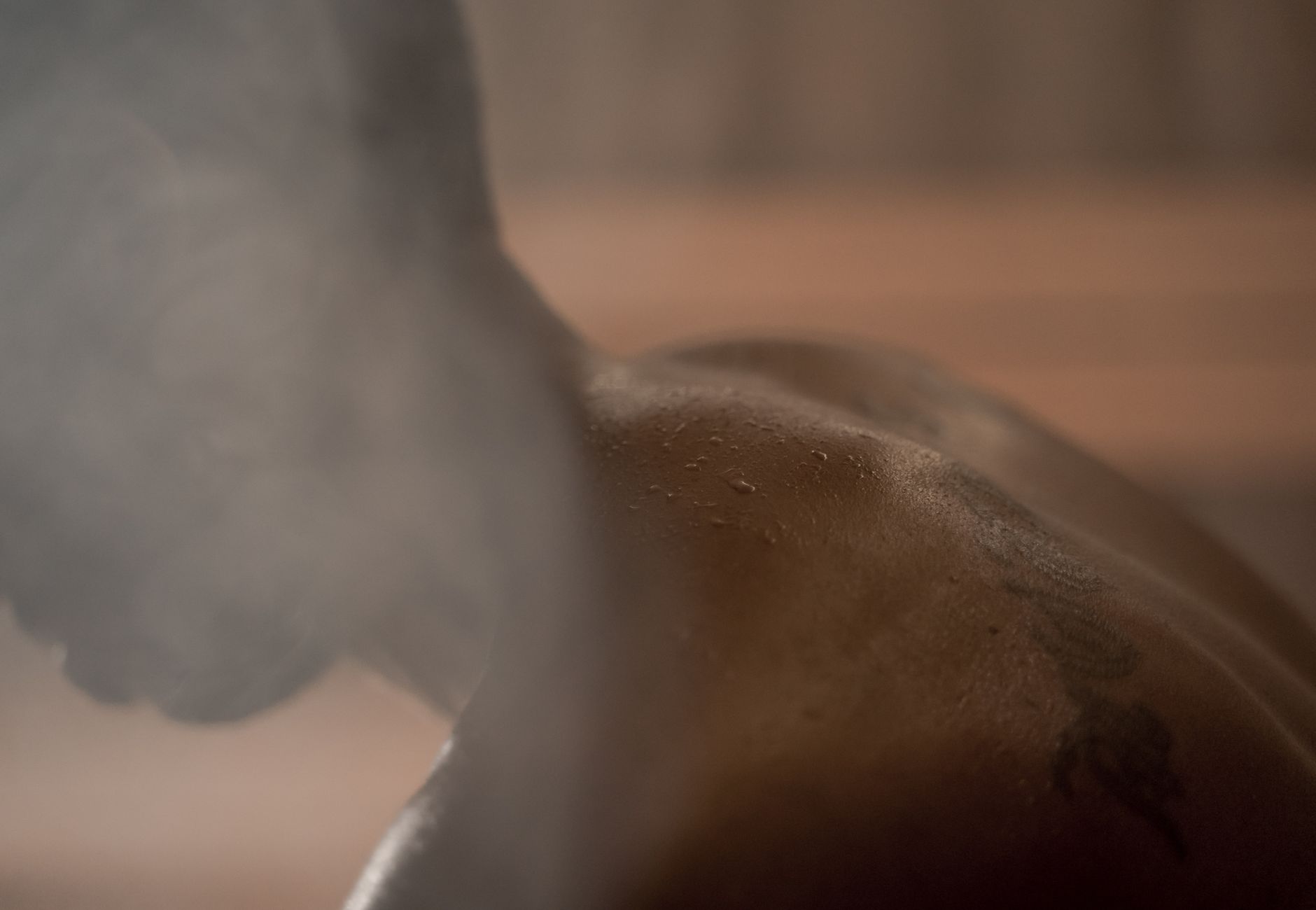 Photo by
 The first thing you notice is the air. Dense, warm, almost solid. You breathe it and it breathes back. A traditional hammam holds humidity between 80 and 100 percent, with temperatures ranging from 38°C in the cool room to around 50°C in the hot chamber. This is not a sauna's dry scorch. This is saturation.
And skin responds to that distinction in ways that are worth paying close attention to.
What Steam Does That Dry Heat Cannot
When ambient humidity rises above 70 percent, the rate of transepidermal water loss drops dramatically. Skin stops trying to equilibrate with the surrounding air. It simply... holds. The stratum corneum, the outermost layer of skin, begins to swell as water molecules intercalate between keratin filaments. Under a microscope this looks like a sponge opening. Against your own fingers it feels like softness you didn't know was possible.
Dry heat accelerates evaporation even while dilating capillaries. Steam reverses that equation entirely. Capillaries still dilate, blood rushes to the surface, flushing skin pink or deep rose depending on your tone, but the water stays. The result is genuine hydration rather than the paradoxical dehydration a dry sauna can produce if you sit too long.
That swelling of the stratum corneum also loosens the cohesion between dead skin cells. This is why the traditional hammam treatment, the kessa scrub with its rough woven mitt, works so efficiently after twenty minutes of steam exposure rather than before. You're not fighting the skin. You're removing what is already barely attached.
The Marble as Participant
Consider the heated marble slab at the center of a traditional hammam: the göbek taşı, literally the navel stone. Its temperature sits around 40–45°C, sustained by the hypocaust system beneath. You lie down and the stone conducts heat into your back, your shoulders, your thighs.
Conduction is slower than convection but deeper. Steam warms the skin's surface quickly; marble warms through it. Connective tissue in the fascia begins to relax. Muscles release tension they've held so long you stopped noticing it. The sensation of lying on warm wet stone is one of the more underrated physical experiences available to a human body.
Water arrives in the form of hot poured bowls, cold shock rinses, and the sweat your own body produces. You become wet from four directions simultaneously: the air, the stone, the attendant's water, yourself.
What Soap and Lather Add
Traditional hammam soap, savon beldi in North Africa or black olive soap in the Levant, is soft and paste-like with a high water content. When worked into a lather across steam-softened skin it spreads in sheets rather than beads. The slip is extraordinary.
This matters photographically and it matters physiologically. A lathered, steamed body reflects light differently from a simple wet body: the foam catches highlights, the skin beneath glows rather than gleams. For aquatic photographers, the hammam environment produces a quality of light and surface texture almost impossible to replicate elsewhere. Marble, steam, white foam, flushed skin, the tonal range is narrow but each element within it is precise.
Physiologically, the alkaline pH of traditional soap combined with steam-swollen skin means cleansing happens at the follicular level. Sebum that has oxidized in pores over weeks lifts out with minimal mechanical effort.
The Cold Rinse and What It Closes
At the end of the sequence, cold water. Not plunge-pool cold but genuinely cool: somewhere around 18–22°C poured from a copper bowl or a low tap. After thirty to forty minutes of sustained heat, this temperature drop causes rapid vasoconstriction. Blood retreats from the skin's surface. Pores tighten. The skin, which has been open and receiving for the duration of the session, closes.
What remains afterward is a particular kind of smoothness. Tactile memory is subjective, but most people who emerge from a proper hammam describe skin that feels thinner, paradoxically, not from loss but from clarification. Everything surplus is gone. What's left is the actual surface.
graph TD
    A[Enter warm room] --> B(Steam saturates skin)
    B --> C{Stratum corneum swells}
    C --> D[Kessa scrub removes loosened cells]
    D --> E(Soap lather and rinse)
    E --> F[Cold water closes pores]
    F --> G((Clarified skin emerges))
Why This Sequence Survives
Hammams have been in continuous use across North Africa, the Middle East, Central Asia, and Southern Europe for over a thousand years. That persistence has nothing to do with nostalgia. The sequence works because it respects the skin's own biology: open with warmth and moisture, loosen with steam, remove with friction, clean with lather, close with cold.
Modern spa culture borrows from this but rarely replicates it. A steam room followed by a chlorinated pool is not a hammam. The water quality matters; the marble temperature matters; the sequence of exposures matters. Remove any element and you get something pleasant. Keep them all and you get something the body recognizes at a level below language.
Skin knows wet heat. It has for a very long time.
Get Wet Human in your inbox
New posts delivered directly. No spam.
No spam. Unsubscribe anytime.