Brackish Marsh Swimming: What Slow, Tannin-Rich Water Does to Your Skin
 J. Reeves
Marsh water looks like weak tea. That color comes from tannins, humic acids, and dissolved organic matter leaching out of decaying leaves, grasses, and bark over years. When you slide into a blackwater marsh, you are swimming in something genuinely ancient: a slow chemical brew that behaves nothing like ocean water, river water, or the glacial melt most people romanticize.
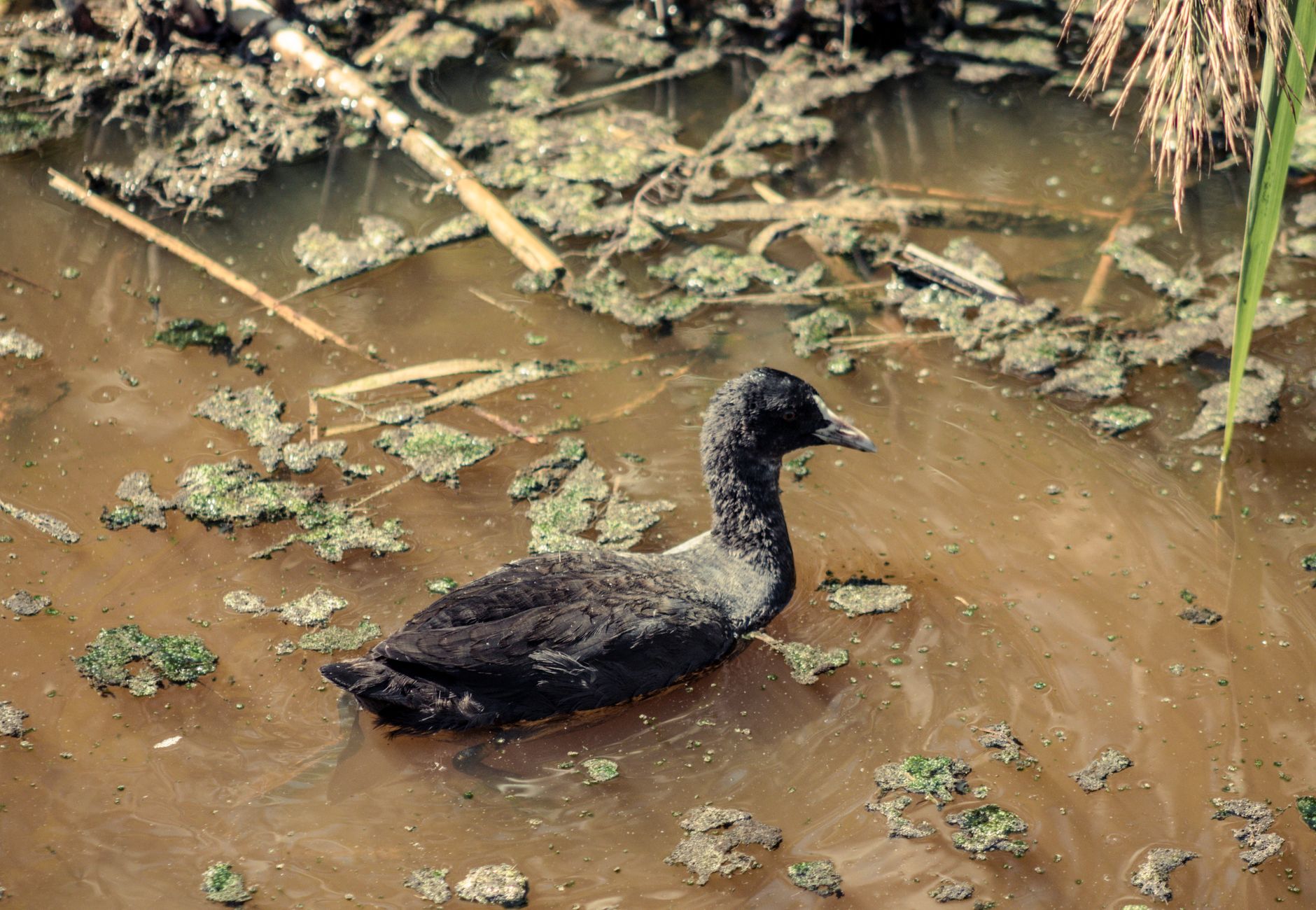 Photo by Zeynep Sude Emek on Pexels.
Your skin notices immediately.
The Tannin Effect
Tannins are polyphenolic compounds. They bind to proteins. That binding action, called astringency, is the same sensation you get from strong black tea on your tongue or red wine on the inside of your cheeks. A pulling, tightening, slightly drying quality. In a marsh, that same chemistry acts on the outermost proteins of your skin surface.
The effect is subtle but real. Tannin-rich water can temporarily tighten pores and reduce surface oils, which is why historical wound-care traditions used tannin-heavy plant extracts as astringents. You probably won't feel it dramatically while swimming. You'll feel it about ten minutes after you get out, when your skin has that peculiar clean-tight sensation that's different from ocean dryness or chlorine tightness. Less harsh. Almost medicinal.
pH and the Acid Balance
Blackwater marshes run acidic, typically between pH 4 and 6.5. Healthy skin sits around pH 4.5 to 5.5. That means marsh water is often closer to your skin's natural acid mantle than the slightly alkaline ocean (around 8.1) or most tap water (6.5 to 8.5).
This matters. Alkaline water disrupts the acid mantle, which is the thin protective film that keeps bacteria out and moisture in. Repeated exposure to alkaline water (pools, the sea, hard tap water) gradually weakens that barrier. Mildly acidic marsh water, by contrast, can actually reinforce it. Swimmers who regularly use blackwater environments sometimes report notably soft, non-irritated skin afterward, and this is probably why.
The caveat: pH varies enormously by location, season, and rainfall. A marsh fed by agricultural runoff might swing toward alkaline. Know your water.
What the Slow Movement Does
Rivers exfoliate. Surf zones pound. Marsh water barely moves, which changes the entire physical experience of immersion.
Without current, water doesn't scour your skin surface. Sediment is mostly settled. You're floating in something close to still, and the contact feels different because of it: warmer in the shallows (marsh water heats up dramatically in summer), with no turbulent pressure variations pushing against you. The sensation is enveloping rather than dynamic.
That warmth has its own skin consequence. Warm water opens pores and increases surface blood flow, the same reason warm baths feel relaxing and your face flushes in a steam room. Combined with the astringency of tannins working in the opposite direction, there's a kind of competing chemistry happening on your skin simultaneously. Warmth opens; tannins tighten. The result is a peculiar softness that doesn't fit neatly into any category.
Humic Acids and What They Actually Do
Beyond tannins, humic acids are a major component of marsh water's brown color. These are large, complex organic molecules that have been studied in skincare contexts for decades. Some European spa treatments specifically use humic-acid-rich peat water for its reported anti-inflammatory properties.
The research is modest but consistent: humic acids show antioxidant activity in vitro and can reduce certain inflammatory markers in skin tissue. Whether a thirty-minute marsh swim delivers a meaningful dose is an open question. But the chemistry is there. This isn't wishful thinking dressed up as science.
The Mineral Picture
Marsh water is low in dissolved minerals compared to the sea or true mineral springs. What it contains depends almost entirely on local geology and vegetation. Coastal marshes carry some salinity. Inland marshes might be nearly pure soft water with organic matter. Neither version provides the mineral load that, say, a magnesium-rich hot spring delivers to your skin.
What marsh water does provide is a kind of chemical gentleness. Without heavy mineral salt, there's no significant dehydrating pull on your skin cells. You emerge without that stretched, tight post-ocean feeling. The organic compounds in the water don't strip lipids the way chlorine does.
The skin you bring out of a marsh is pretty close to the skin you brought in, just temporarily astringed, lightly acidified, and carrying that distinctive dark-water smell: earthy, green, alive.
Some people find it unpleasant. Others find it one of the more honest smells water has to offer.
Slow water tells a different story on your body than any fast or salt-heavy alternative. Worth knowing what it's actually saying.
Get Wet Human in your inbox
New posts delivered directly. No spam.
No spam. Unsubscribe anytime.