Wet Hair and Skin: How Water Transforms the Body's Surface in Photography
 J. Reeves
Wet hair does something to a photograph that dry hair simply cannot. It pulls focus. It redirects light. It turns a body into something elemental, less styled, more present.
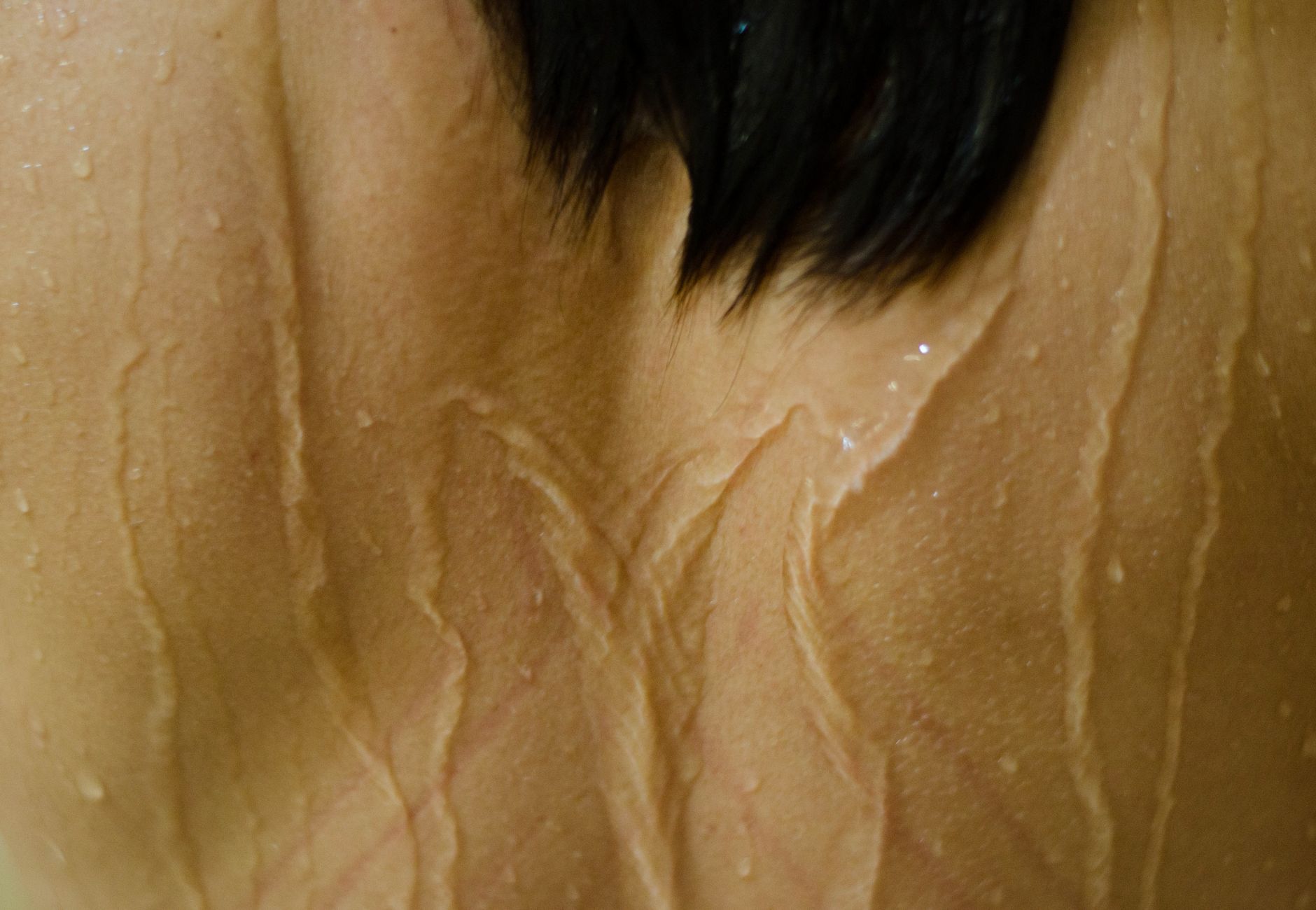 Photo by
 Most conversations about water and skin skip past the hair entirely, treating it as backdrop rather than subject. That's a mistake. When hair saturates with water, it undergoes a complete structural shift: the cuticle layers swell and flatten, strands clump into dark ropes or sheets, and the whole mass takes on a weight and directionality that sculpts the body around it. You're not just photographing a wet person. You're photographing gravity.
What Water Does to Hair, Physically
Dry hair is mostly air. Each strand is roughly 91% protein and 9% water under normal conditions, but immerse it, and that water content can jump to 30% or more within seconds. Keratin, the primary structural protein in hair, is hydrophilic; it actively draws moisture in. As it absorbs water, it swells laterally (not lengthwise), which is why wet hair feels thicker but doesn't actually grow longer.
The visual consequence? Dark, defined, weighted. Individual strands disappear. What remains is shape, the architecture of the head and shoulders suddenly exposed by clinging wet mass.
For photography, this matters enormously.
How Wet Hair Redirects Light on Skin
Dry hair scatters light. Wet hair reflects it, selectively, directionally, like a surface rather than a volume. When hair plasters against a neck, a shoulder, a collarbone, the reflected light from that wet surface creates a kind of secondary fill, bouncing soft illumination back onto nearby skin.
Shoot someone with soaking hair backlit by afternoon sun and watch what happens at the edges: the hair rim-lights itself and casts that glow forward. Skin beside wet hair often looks luminous in ways that skin next to dry hair simply doesn't. The contrast is doing work, dark saturated strands beside lighter wet skin creates the eye a path to follow.
That path matters in composition. Wet hair falling across a shoulder gives the viewer a line. Down a bare back, it becomes a river of its own.
The Sensation Side
Beyond the visual, there's what wet hair actually feels like, and that sensation translates into posture, expression, and the subtle body language that makes or breaks a photograph.
Wet hair is cold. It pulls. It clings to skin with a light suction that registers differently depending on where it touches, the back of the neck is particularly sensitive, as anyone who has emerged from a pool on a cool morning knows. That cold weight against warm skin creates an involuntary response: a slight tension in the shoulders, a tucking of the chin, sometimes a small shiver.
Good photographers know to work with this, not against it. Rather than asking a subject to ignore the physical sensation, let it inform the moment. The reaction to wet hair on skin is honest. Cameras catch honesty.
Saltwater vs. Freshwater: The Texture Difference
Not all wet hair reads the same. Saltwater-soaked hair has a coarser, almost textured quality, the salt crystals begin forming as water evaporates, giving individual strands a slight rigidity and a matte, sun-bleached look even when still damp. Ocean-wet hair against skin carries that coastal roughness; it looks used, in the best sense.
Freshwater hair, pool, lake, rain, lies flatter and smoother. It reflects more cleanly. Against skin it creates sharper contrast lines, more defined edges where hair meets shoulder or jaw.
Choose based on mood. Salt for wildness and texture. Fresh for precision and that mirror-like sheen.
Practical Notes for Shooting
A few things that actually make a difference on set or on location:
- Re-wet frequently. Hair dries faster than you think, especially in wind or sun. Once hair starts drying unevenly, you lose the clean shapes. Keep a spray bottle with water (or a small bucket) nearby.
- Shoot immediately after full submersion. The first 30 seconds out of water are often the best, maximum saturation, water still moving.
- Watch where the water is going. Rivulets running down skin from wet hair are their own compositional element. A single line of water tracing from hairline to collarbone tells a story. Frame it.
- Backlighting is your friend here. Front light flattens wet hair into a dark mass. Side or back light reveals every strand, every drop, every glint.
Wet hair is not an afterthought in water photography. It's a collaborator, one that shifts light, defines form, and carries the body's relationship with water in a way no other element quite replicates. Pay attention to it and your images will show you why.
Get Wet Human in your inbox
New posts delivered directly. No spam.
No spam. Unsubscribe anytime.