Swimming at Night: How Darkness Changes the Way Water Feels on Skin
 J. Reeves
Something shifts when you enter water at night.
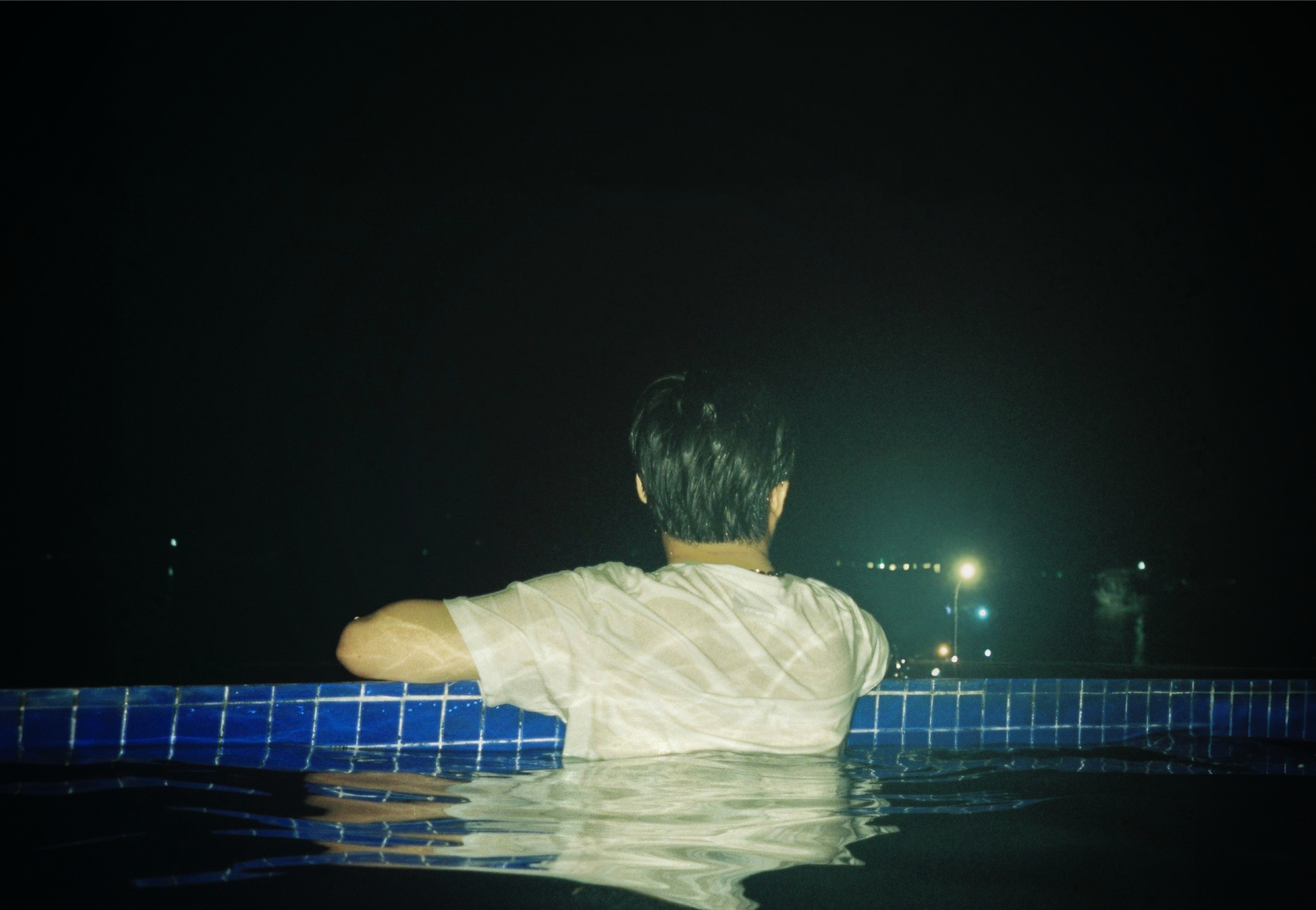 Photo by Vincent Nguyen on Pexels.
Not metaphorically, physiologically. Without the visual cues you normally rely on, your nervous system redistributes its attention. Touch becomes louder. Temperature becomes sharper. The skin, which spends daylight hours competing with eyes and ears for your brain's interpretation of the world, suddenly has the floor.
This isn't mysticism. It's sensory neuroscience, and it makes night swimming one of the most interesting things you can do with a body of water.
Why Darkness Amplifies Skin Sensation
Your skin contains several distinct types of mechanoreceptors, touch sensors embedded at varying depths in the dermis and epidermis. Meissner's corpuscles handle light, moving contact; Ruffini endings register sustained pressure and stretch; Merkel discs respond to fine detail. During normal waking life, the brain allocates most of its processing bandwidth to visual input, roughly 30% of the cortex by some estimates.
Remove that input and the balance tips. Neuroplasticity researchers call this "cross-modal compensation", when one sense dims, others sharpen through increased cortical attention, not through any change in the sensors themselves. Your skin doesn't suddenly grow new receptors after dark. Your brain simply starts listening harder.
The practical result: water you've swum in a hundred times feels different at midnight. Colder. More textured. More present.
The Thermal Effect Is Real, Too
Daytime heat from the sun creates a surface temperature gradient in open water, warmer water riding on top, cooler layers below. By evening, that gradient flattens. Surface temperatures drop faster than the deeper water cools, which means night swimming often involves a thermal reversal you can feel on your skin as you move through different depths.
That variation registers as something close to tactile: a cold band around the thighs, warmth returning at the chest, then cold again at the hands as they pull forward. In a pool, the effect is subtler but still present, tiles and concrete shed heat faster than water, making the edges feel sharper on your skin when you touch the wall.
Pool or open water, the skin reads temperature as spatial information when it's moving. Night removes the distraction of what's visible and leaves that spatial map intact.
What Night Does to the Skin's Surface
Ultraviolet exposure does more to skin than cause sunburn. UVA radiation, which penetrates deeper than UVB, temporarily alters surface lipid composition and accelerates transepidermal water loss, meaning skin exposed to full sun is measurably drier and more permeable than the same skin at midnight. Night swimming, then, meets less compromised skin.
Humidity also tends to run higher after dark, particularly near open water. Higher ambient humidity slows evaporative cooling from wet skin after you exit, extending the sensation of being soaked, that slow, reluctant drying that feels like the water doesn't want to leave.
There's something worth savoring there. Don't rush it.
The Psychological Layer (Which Is Also Physical)
Fear response produces real skin changes: vasoconstriction at the surface, piloerection, increased sensitivity at the extremities. A lot of people feel low-grade anxiety entering dark water, especially open water, and that anxiety is written on the skin before they even submerge.
What's interesting is what happens after the first few minutes, once the brain accepts the situation. Cortisol drops. Vasodilation follows. Skin temperature at the surface actually rises slightly as blood flow returns. The water that felt shockingly cold at entry starts to feel, not warm, exactly, but received.
That transition is one of the most purely physical experiences available to a body. It requires darkness to fully deliver.
A Few Practical Notes
Night swimming in open water carries genuine risk: reduced visibility for boats, harder rescue if something goes wrong, disorientation without visible landmarks. Swim with someone who knows the water. Use a tow float with a light if you're in any area with boat traffic. These aren't caveats meant to discourage you, they're the conditions under which the experience becomes available without consequence.
In a pool at night, risk is negligible and the sensory shift is still real. Even a familiar backyard pool after dark offers a different register of sensation than the same water at noon.
Go slow when you enter. Don't fight the dark. Let the skin do what it's been waiting to do when no one was asking anything else of it.
Water has always been more interesting than it looks. At night, you finally stop looking and start feeling it properly.
Get Wet Human in your inbox
New posts delivered directly. No spam.
No spam. Unsubscribe anytime.