Waterfall Skin: What Falling Water Actually Does to Your Body
 J. Reeves
There's a moment, right before you step under a waterfall, where your body knows what's coming before your mind does. Every muscle tightens slightly. Your breath shallows. Then the water hits, and everything you thought you understood about being wet gets rewritten.
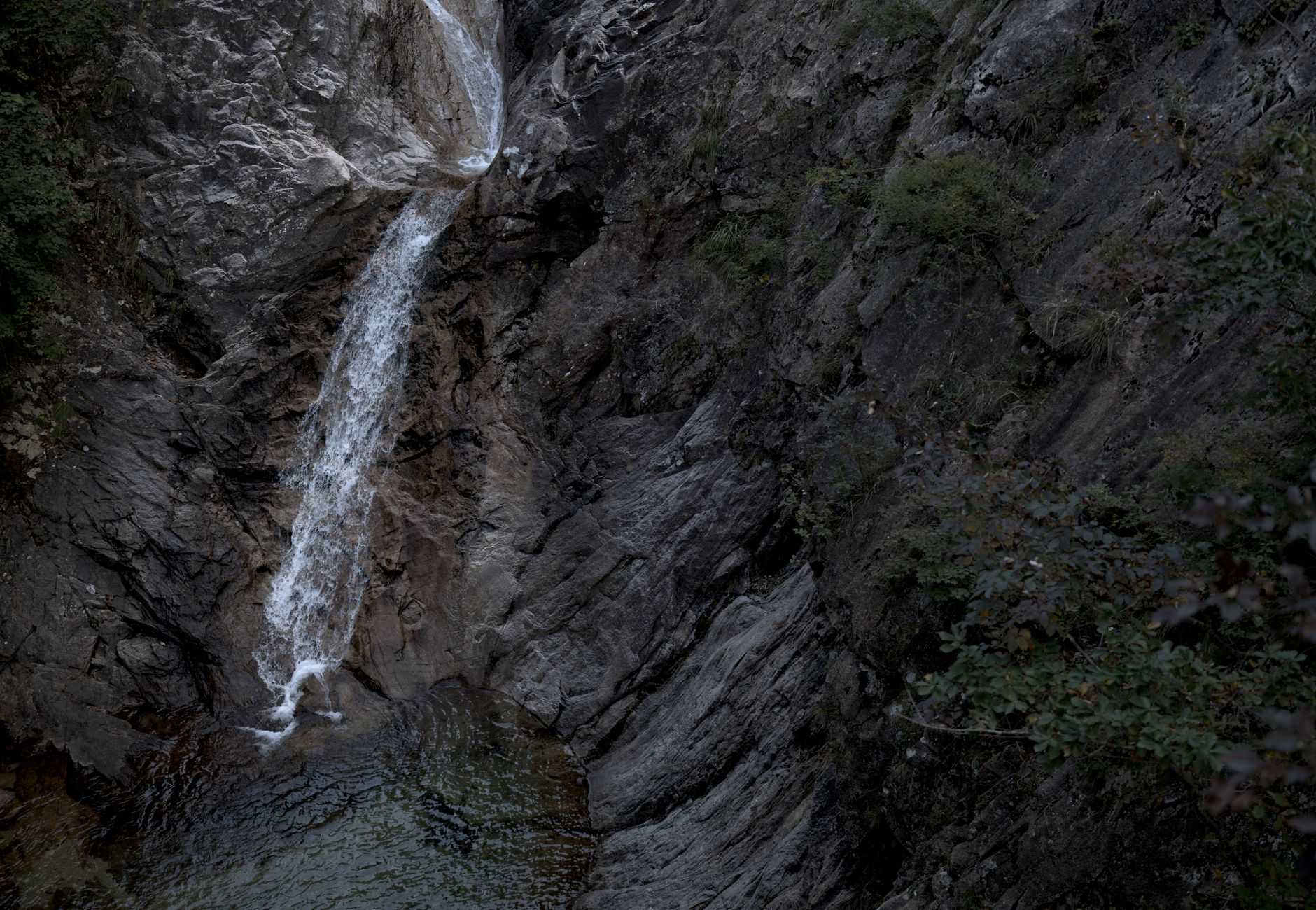 Photo by 정규송 Nui MALAMA on Pexels.
Waterfalls are not just water. They're water with force, water with sound, water with a particular kind of pressure that pools and showers and even heavy rain can't replicate. What happens to your skin in that encounter is genuinely interesting.
The Physics of Impact
When water falls from height, it accelerates. A waterfall dropping just three meters reaches the water's surface at roughly 7-8 meters per second, fast enough that individual droplets break apart on contact with skin, creating a fine mist that floats upward even as the main column drives downward. This is why you're often soaked from every direction under a waterfall, not just from above.
That broken spray carries something else: negative ions. The mechanical disruption of falling water, called the Lenard effect, strips electrons from water molecules and generates a measurable charge in the surrounding air. Waterfalls, breaking waves, and heavy rain all do this. The ion concentration near a large waterfall can be 10 to 20 times higher than in a typical indoor space. Whether or not you buy the wellness industry's more extravagant claims about negative ions, the air around falling water is genuinely, chemically different from the air anywhere else.
Your skin is in that air, absorbing it.
Percussion, Not Just Pressure
What distinguishes a waterfall from a pool or a river is percussion, repeated, rhythmic impact across the skin's surface. Your mechanoreceptors (the sensors embedded in skin that detect pressure and vibration) respond differently to sustained force versus repeated impact. A waterfall delivers both simultaneously: the constant weight of moving water and the staccato of individual streams hitting different areas at slightly different moments.
This is why standing under even a modest waterfall feels more overwhelming than swimming in turbulent surf. It's not about volume of water. It's about the density and variety of signals your skin is trying to process at once.
For most people, the first thirty seconds are borderline too much. Then something shifts. The nervous system stops trying to catalog each individual sensation and starts processing the whole as a single, continuous input, almost like white noise for touch. That shift is why people emerge from a waterfall experience describing a specific kind of calm: not relaxed exactly, but quieted.
Cold as a Constant
Most natural waterfalls are cold. Not dramatically cold like a glacial plunge pool, but consistently cool, often 12-16°C even in summer, depending on source elevation. That sustained cool temperature does specific things to the skin that brief cold exposure doesn't.
Vasoconstriction happens first: blood vessels near the skin surface narrow, which is why skin looks paler and feels firmer under the water. But hold position for two or three minutes and something counterintuitive follows, a rebound dilation, where blood rushes back to the surface with more force than before. Skin reddens. It feels warmer. Your nerve endings, briefly numbed by the cold, fire back with unusual clarity.
The texture of your own skin feels different after. Smoother in some places, hypersensitive in others. This isn't imagination, it's your touch receptors recalibrating after a period of partial suppression.
What You Carry Out of the Water
Hours after a waterfall encounter, skin often retains a particular quality: slightly tighter, slightly more alive-feeling at the surface. Some of this is the cold's lingering effect on circulation. Some is the mineral contact, natural waterfalls carry dissolved calcium, magnesium, and silica from the rock they've traveled through, and these leave trace deposits on skin even after drying.
The sensory memory lingers too. Touch something with your fingertips that evening and there's often a heightened quality to the sensation, a sharpness that wasn't there in the morning.
Waterfalls have appeared in human ritual and mythology across nearly every culture that had access to them. That's not coincidence. Whatever the specific beliefs surrounding them, they were always right about the essential part: you go in one kind of wet and come out another.
Some water just changes you.
Get Wet Human in your inbox
New posts delivered directly. No spam.
No spam. Unsubscribe anytime.