Rain-Soaked Fabric and Skin: What Wet Clothing Actually Does to the Body Beneath It
 J. Reeves
Most of what we write about here concerns bare skin meeting water directly. But a huge amount of the wettest, most intimate human experience happens with a layer of cloth in between. Think about the last time you got caught in a real downpour wearing a t-shirt. The water didn't just land on you. It negotiated with fabric first, and that negotiation changes everything about how it ends up feeling against your body.
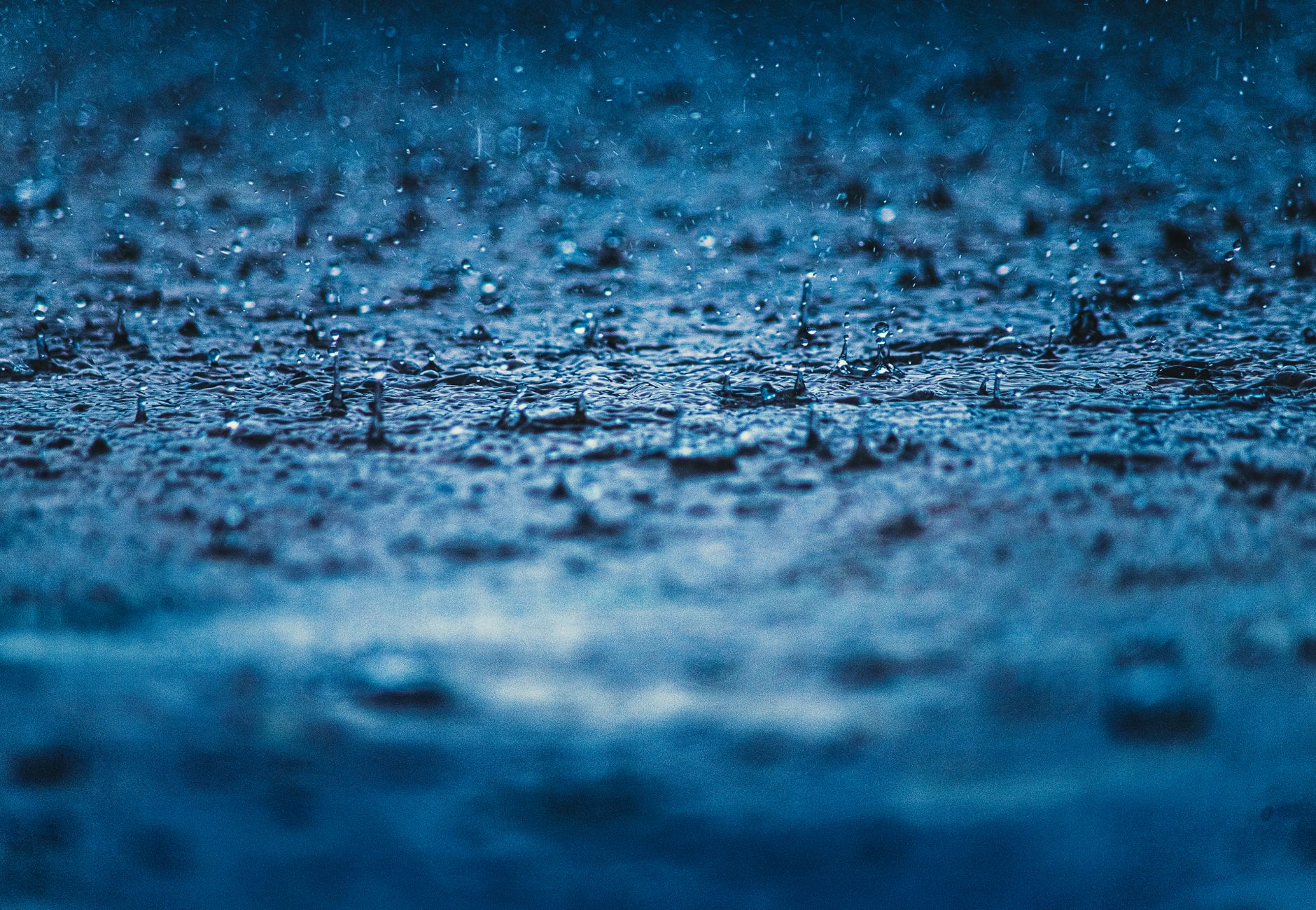 Photo by Animesh Srivastava on Pexels.
Cotton is the material most people have the most experience with, and it's also the worst at managing water, which is exactly why it feels the way it does. Cotton fibers absorb water into their structure rather than letting it bead and run off. A cotton shirt in heavy rain can hold several times its dry weight in water within a couple of minutes. That absorbed water heats up against your skin, then cools as air moves across the wet surface, so you get this strange oscillation between warmth and chill that bare wet skin doesn't produce nearly as strongly. The fabric clings, too, because wet cotton loses structure and starts following the contours of whatever it's covering. That's the visual and tactile signature everyone recognizes: cloth gone translucent, sticking to shoulders and the small of the back, outlining a body instead of hiding it.
Denim behaves almost oppositely. It's dense and slow to saturate, so in light rain it can look dry on the surface while already damp underneath. When denim does fully wet out, it gets heavy fast and stays heavy, because the weave traps water in a way cotton knits don't. Anyone who's swum in jeans knows the drag; on land, wet denim against skin feels less like a second surface and more like a separate, uncooperative object pressing in from outside.
Silk does something closer to what water does on bare skin: it sheds rather than absorbs, beading and sliding because the fiber surface is smooth and the weave tight. Wet silk against skin keeps a thin independent layer of water moving between fabric and body, which is why it feels cooler and more slippery than cotton even at the same water temperature. Synthetic performance fabrics (engineered to wick) do a technical version of the same trick, pulling moisture away from skin through capillary channels built into the fiber.
Temperature context matters as much as material. Warm rain through a thin cotton shirt on a hot day reads as relief, almost like a second skin cooling the first one. The same shirt, same rain, at 55 degrees, becomes something your body actively fights against, pulling heat out through contact points where the fabric clings tightest: across the shoulder blades, along the spine, at the collarbone.
graph TD
    A[Rain contacts fabric] --> B{Fabric type}
    B --> C[Cotton: absorbs, clings, heats then chills]
    B --> D[Denim: slow saturation, heavy drag]
    B --> E[Silk/synthetic: sheds, slides, stays cool]
    C --> F[Skin sensation varies by fiber behavior]
    D --> F
    E --> F
For photographers, wet fabric is often more expressive than bare skin precisely because it reveals indirectly. A soaked shirt tells you about the body underneath through tension lines, shadow, and the places where cloth has given up and gone transparent. It's a slower reveal than skin alone, and that slowness is the appeal: the eye has to do some of the work the water already did.
Next time you're caught out in rain, pay attention to which part of your clothing gives in first. It's rarely random. Seams, pocket edges, and anywhere fabric doubles over resist longer, while flat single-layer stretches across the chest or back go translucent almost immediately. That's not fashion. That's just where the water finds the least resistance, same as it always does.
Get Wet Human in your inbox
New posts delivered directly. No spam.
No spam. Unsubscribe anytime.