Drizzle vs Downpour: How Rain Intensity Changes the Way Water Moves on Skin
 J. Reeves
Not all rain touches you the same way. A fine drizzle and a hard downpour might both leave you soaked, but the path water takes to get there, and what it does once it arrives, couldn't be more different. If you've ever stood through both in the same afternoon, you already know the difference in your body before you can put it into words.
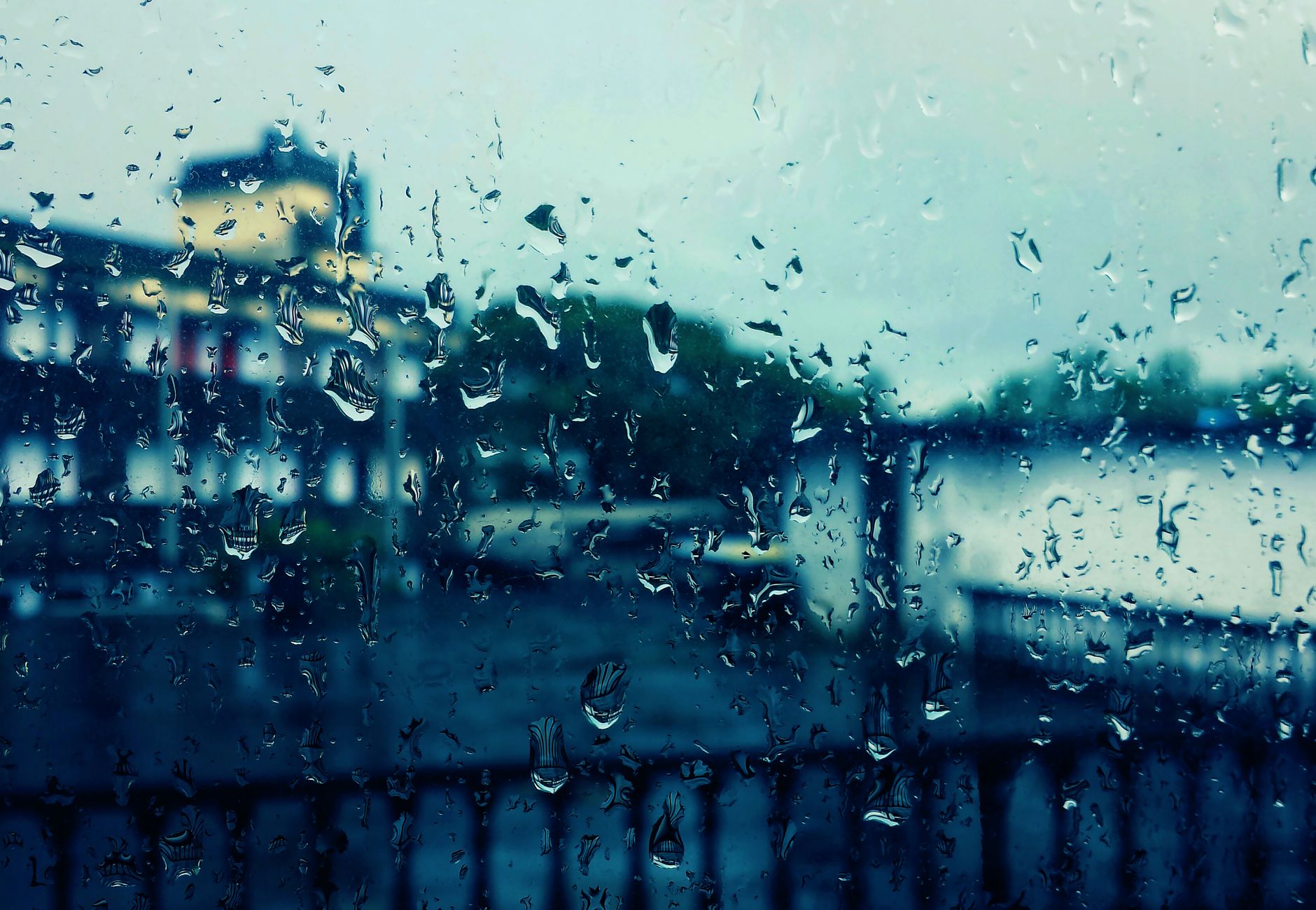 Photo by Sabeel Ahammed on Pexels.
Drizzle works slowly. Droplets under half a millimeter fall at barely a meter per second, so light they barely disturb the air around them. On skin, drizzle doesn't so much hit as settle. It accumulates in a thin film, following the micro-contours of your arms and collarbone, pooling faintly in the hollow of your throat. Because the drops are so small and so gentle, they don't knock loose the oils on your skin's surface the way heavier rain does. You end up with a kind of glaze: even, quiet, almost imperceptible until you notice your shirt has gone translucent.
A downpour is an entirely different physical event. Drops in a heavy storm can exceed five millimeters across and fall at speeds near nine meters per second, the terminal velocity where air resistance finally balances gravity for a raindrop that size. That's real force landing on your shoulders and scalp, enough to actually sting at the right angle. Downpour water doesn't glaze, it strikes and scatters. Each impact throws up a tiny crown splash, a brief coronet of droplets that photographers chase because it only lasts milliseconds. On skin, that means a constant low-grade percussion, a rhythm you can feel in your pulse points if you stand still long enough.
The difference isn't only mechanical. Drizzle tends to arrive with cooler, stiller air, so the net effect is often a damp chill that creeps in gradually. You might not notice you're cold until you're already shivering. Downpours, especially the sudden tropical or summer-storm kind, frequently come with warm air pushed ahead of the front, so the first minutes can feel almost bathlike even as the volume of water increases dramatically. That's the paradox a lot of people miss: heavier rain sometimes feels warmer on first contact, purely because of what's happening in the atmosphere above it.
graph TD
    A[Rain Event] --> B{Drop Size}
    B --> C[Drizzle: under 0.5mm]
    B --> D[Downpour: 2-5mm+]
    C --> E[Slow film buildup]
    C --> F[Gradual chill]
    D --> G[Impact splash]
    D --> H[Percussive sensation]
For photography, the contrast is just as sharp. Drizzle produces a soft-focus effect on skin, almost like a filter has been applied: highlights diffuse, edges blur slightly, the whole frame reads hushed. Downpour photography is about catching motion and texture at once, the sheet of falling water visible as near-vertical streaks against a dark background, with individual drops frozen mid-crown-splash if your shutter speed is fast enough (1/1000s or quicker usually does it).
There's also the sound, which shapes how the sensation registers even if it's not technically touching your skin at all. Drizzle is nearly silent, a faint hiss if anything. A downpour on pavement or a tin roof becomes a wall of white noise loud enough to mask conversation, and that auditory intensity bleeds into how the water feels, making a downpour register as more overwhelming even when the actual temperature difference is small.
Neither is better. Drizzle rewards patience and stillness, the kind of rain you can stand in for twenty minutes without really deciding to. Downpour rewards commitment: once you're in it, you're fully in it, soaked within seconds, past the point of trying to stay dry. Knowing the difference, really knowing it in your skin, changes how you plan a swim, a walk, or a shoot. Check the radar for drop size estimates if you're serious about this, not just the percentage chance of precipitation. The number that matters most is the one most apps don't give you.
Get Wet Human in your inbox
New posts delivered directly. No spam.
No spam. Unsubscribe anytime.