Cold Water Swimming: How Temperature Transforms Your Skin
 J. Reeves
Your skin becomes a different organ entirely when it meets cold water. The transformation happens in seconds, blood vessels constrict, pores tighten, and suddenly you're wearing a canvas that catches light differently than it ever does on dry land.
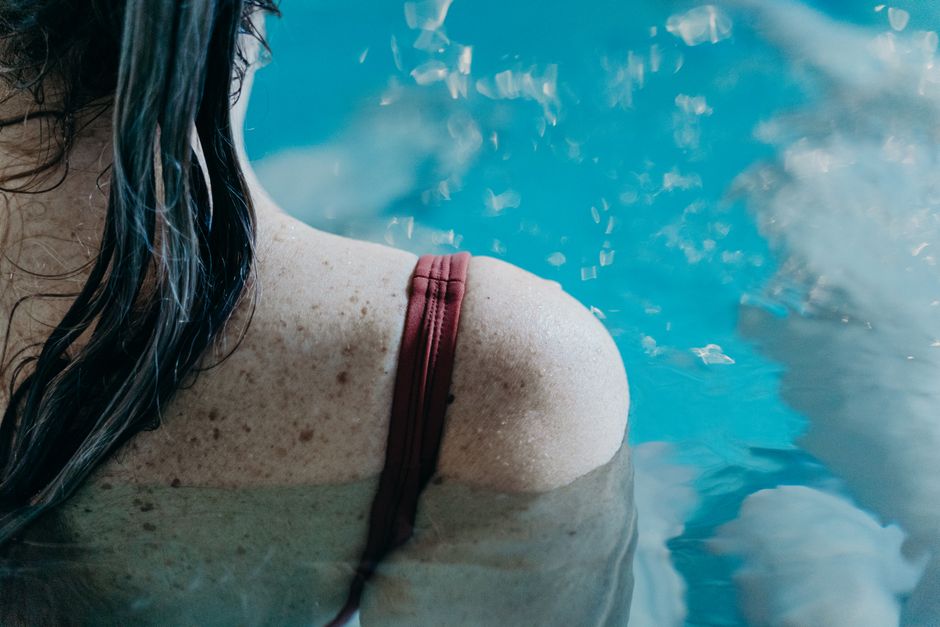
Cold water swimmers know this intimacy well. Below 60°F (15°C), your skin shifts into survival mode, prioritizing core temperature over surface comfort. What most people experience as shocking cold, regular practitioners learn to read as a complex conversation between body and element.
The initial vasoconstriction creates that distinctive pale, almost luminous quality in cold water photography. Your skin literally becomes more reflective as surface blood flow redirects inward. This isn't just aesthetics, it's physiology creating art.
The Science Behind the Glow
When water temperature drops below your skin's baseline of roughly 91°F (33°C), several responses cascade through your system:
Immediate response (0-30 seconds): Surface capillaries slam shut. Your skin becomes taut, almost porcelain-like. This is when that ethereal, marble-statue effect peaks.
Adaptation phase (1-5 minutes): If you stay immersed, periodic vasodilation begins. Blood pulses back to your extremities in waves, creating a flushed, mottled appearance that photographers prize for its unpredictability.
Cold adaptation (5+ minutes): Regular cold water swimmers develop what researchers call "non-shivering thermogenesis." Their skin learns to maintain better circulation even in frigid conditions.
graph TD
    A[Enter Cold Water] --> B[Vasoconstriction]
    B --> C[Pale, Tight Skin]
    C --> D[Stay Immersed?]
    D -->|Yes| E[Periodic Vasodilation]
    D -->|No| F[Exit and Rewarm]
    E --> G[Flushed, Mottled Appearance]
    F --> H[Gradual Color Return]
    G --> I[Sustained Cold Adaptation]
Temperature Thresholds That Matter
Not all cold water creates the same skin response. Here's what different temperature ranges do:
65-70°F (18-21°C): Refreshing but minimal vascular response. Good for beginners.
55-65°F (13-18°C): Noticeable skin tightening and color changes. The sweet spot for dramatic photography without extreme stress.
45-55°F (7-13°C): Intense vasoconstriction followed by pronounced flushing cycles. Experienced swimmers only.
Below 45°F (7°C): Extreme response. Skin becomes almost translucent before the flush response kicks in.
Water conducts heat 25 times faster than air at the same temperature. This means 60°F water will transform your skin far more dramatically than 60°F air ever could.
Reading Your Skin's Signals
Your skin telegraphs your cold water experience in ways that trained observers can decode:
Goosebumps aren't just texture, they're your follicles' attempt to create insulation where none exists.
Color progression tells the story: initial pallor, then mottled pink and white, finally the deep flush of successful adaptation.
Texture changes reveal circulation patterns. Smooth, tight areas show active vasoconstriction; softer, warmer patches indicate better blood flow.
Experienced cold water swimmers develop a sixth sense for these signals. They know when their skin is adapting well versus when it's time to exit and rewarm.
The Afterglow Effect
Perhaps the most striking transformation happens after you leave the water. The "afterdrop", when your core temperature continues falling briefly, creates a unique skin state. Blood returns to the surface in waves, creating that coveted post-swim glow that can last for hours.
This isn't the pink flush of a hot shower. Cold water creates something more complex: a luminosity that seems to come from within, as if your skin has learned to hold and reflect light differently.
Cold water swimming transforms more than just how your skin looks, it changes how you inhabit it. Each immersion becomes a negotiation between comfort and adaptation, between the person you are on land and the being you become when embraced by water that demands everything of you.
Get Wet Human in your inbox
New posts delivered directly. No spam.
No spam. Unsubscribe anytime.