Brackish Water Swimming: What Happens to Skin Where Rivers Meet the Sea
 J. Reeves
Estuaries are strange places. Where a river pushes into the sea, the water becomes something neither source would claim: brackish, variable, alive with suspended sediment and shifting salinity. Swimmers who venture into these zones encounter conditions that freshwater lakes and open ocean never quite replicate. Your skin notices all of it.
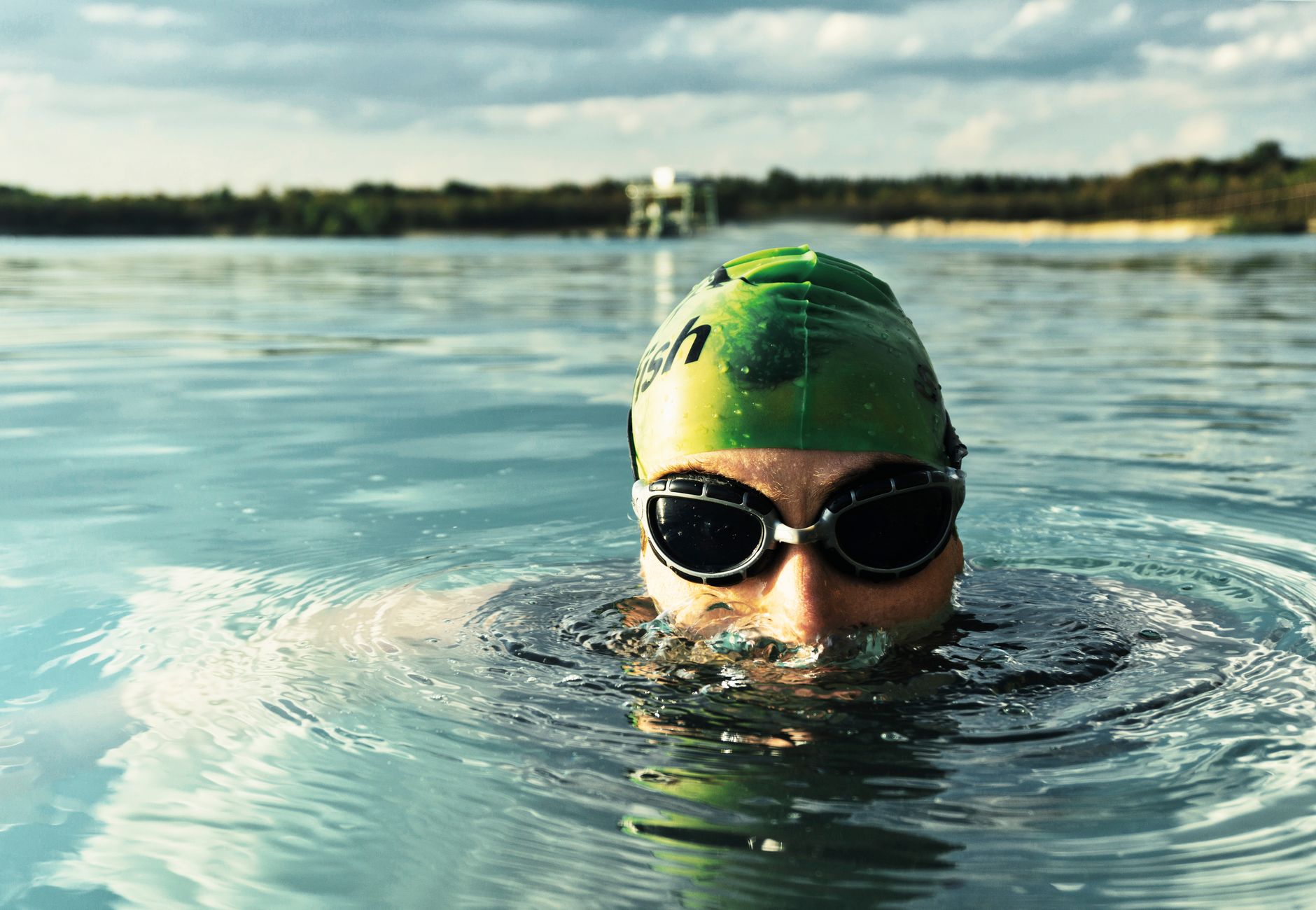 Photo by mali maeder on Pexels.
Salinity tells the story. Ocean water runs at roughly 35 parts per thousand salt. Rivers hover near zero. Brackish estuaries can sit anywhere between 0.5 and 30 ppt, depending on the tide, the season, and how hard it rained upstream last week. That variability is the defining feature. You might enter at low tide when the river dominates, and the water feels almost silky, close to neutral against your skin. An hour later, the flood tide pushes in and the salt concentration climbs. The feeling shifts under you without warning.
What changes physiologically? Osmosis. Your skin is a semi-permeable membrane, and the water surrounding it either draws moisture outward or allows absorption depending on the salt differential. In true freshwater, your body loses very little to osmosis and gains a small amount of surface hydration. In full seawater, the dynamic reverses: the salt gradient pulls moisture toward the water. Brackish sits in an unstable middle, close enough to isotonic that the osmotic pressure against your skin stays lower than the ocean, but variable enough that a tidal surge shifts the equation mid-swim.
The result is skin that feels less stripped than after an ocean session, but also less neutral than a lake. Many open-water swimmers describe brackish conditions as vaguely mineral: a faint resistance on the surface that freshwater doesn't have, without the tightening dryness that follows a long saltwater swim. Photographers who shoot in estuarine environments notice it too. Water droplets on skin behave differently when salinity sits at partial concentration. They bead less aggressively than saltwater, cling with more weight than fresh. The visual texture of wet skin in brackish water has a particular quality: slightly opaque, heavy with suspended particles, the kind of sheen that reads as elemental rather than clean.
Sediment adds another layer. Estuaries carry whatever the river collected upstream: fine silt, organic matter, clay particles that stay suspended in the water column. Swimming through it feels different from the visual clarity of a lake or the open swell of the sea. The water is tactile. Particles brush across your arms and legs with a softness that's almost imperceptible, but the cumulative sensation over a long swim registers as a kind of gentle exfoliation. Your skin emerges with a faint silt residue that rinses easily but reminds you where you've been.
Temperature stratification runs sharper in estuaries than in either source. Cold river water tends to hug the surface at low tide; warmer tidal water can slide in at depth during the flood. Swim through a thermal boundary in an estuary and the contrast can be striking: your upper body sitting in river-cold while your legs cross into something warmer and saltier below. Skin reads thermal shifts faster than the brain processes them consciously. The sensation arrives first as a kind of pressure change, then as temperature.
For photography, brackish environments offer a quality of light that purely marine or freshwater locations rarely match. Estuary water often carries a golden-brown tint from tannins and sediment that turns the surrounding surface into something close to amber in late afternoon sun. Skin photographed against that water picks up warm undertones. The wet surface of a shoulder or forearm holds light differently when the water around it carries color. Shadows deepen. The contrast between wet skin and the surrounding water compresses in a way that makes images feel intimate rather than vast.
If you swim estuaries regularly, a few things become practical habits. Rinse with fresh water afterward, since the partial salinity still leaves enough mineral residue to irritate if it dries on. Pay attention to tidal windows: the hour after peak flood often brings the clearest, most stable water conditions, before the ebb stirs the bottom sediment again. And notice the moment when the river and the sea are trading places. You can feel it on your skin before you can see it in the water.
That moment is the whole point of brackish swimming. Two bodies of water arguing over the same space, and you suspended in the middle of the negotiation.
Get Wet Human in your inbox
New posts delivered directly. No spam.
No spam. Unsubscribe anytime.